Crawl Space Mold Remediation, Encapsulation & Vapor Barriers · Stamford, CT · FEMA Region 1
24/7 Crawl Space Mold Removal in Stamford, CT — Immediate Dispatch
Remediate subfloor wood rot and crawlspace fungal growth in Stamford and Fairfield County. Connect with independent environmental specialists for subfloor soda blasting, 20-mil vapor barrier encapsulation, and commercial dehumidifier installation.
Step 1: Select Your Current Technical Symptom
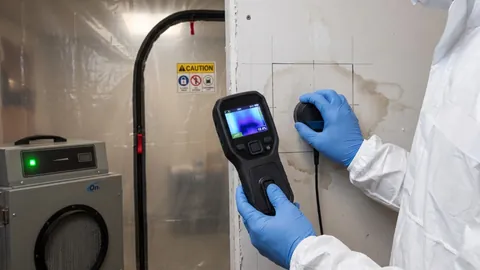
What is the 24/7 Crawl Space Mold Removal emergency protocol in Stamford, CT?
Crawl space mold removal and encapsulation in Stamford, CT stops subfloor wood rot and eliminates musty stack-effect odors across Fairfield County. Independent environmental specialists HEPA-vacuum and dry-ice blast contaminated floor joists, lay 20-mil fiber-reinforced vapor barriers, and install continuous commercial dehumidifiers under Connecticut Dept of Public Health standards.
Immediate 4-Step Action Protocol:
- Inspect crawlspace hatch and subfloor framing: Check for visible white powdery fungal growth on joists, sagging fiberglass insulation, and standing groundwater.
- Avoid opening exterior foundation wall vents in summer: Warm humid outdoor air condenses against cool crawlspace floor joists, exacerbating active mold blooms.
- Ensure crawlspace access is safely illuminated: Do not crawl over saturated soil or contact loose electrical wiring without professional equipment.
- Call crawlspace encapsulation specialists: Connect directly by phone with independent environmental contractors serving Fairfield County for durable vapor barrier defense and moisture control.
*Pricing disclosure: Rates, diagnostic fees, and project terms are established independently by participating local service contractors based on physical on-site assessment.
Call (833) 567-5843 NowCrawl Space Mold Removal Protocols & Technical Standards in Stamford, CT
Up to 50% of the air inhaled on the ground floor of a home originates from the crawlspace via the 'stack effect' (warm air rising through subfloor penetrations and floorboards). In Stamford, unconditioned earthen crawlspaces absorb heavy ground moisture, elevating relative humidity above 70% and triggering extensive white and black mold growth across floor joists and subflooring. Independent specialists serving Fairfield County mechanically clean joists, eliminate ground moisture with commercial 20-mil vapor barrier encapsulation, and install automated dehumidifiers under Connecticut Dept of Public Health guidelines.
Local Regulatory & Technical Standards for Stamford, CT
| Regulatory / Technical Parameter | Statutory Authority & Adopted Code | Engineering Standards & Diagnostic Scope |
|---|---|---|
| State Statutory Licensing Board | Connecticut Department of Public Health (Environmental Health) | Mandatory statutory trade licensing, commercial general liability, and active bond verification under CT administrative code. |
| Adopted Model Building Codes | Connecticut State Building Code / IRC 2021 / IPC 2021 / NEC 2020 | Enforced safety standards governing system installation, mechanical ventilation, backflow prevention, and combustion venting. |
| Municipal Permitting & Inspection Triggers | Fairfield County Building Department Standards | Department of Consumer Protection requires P-1/P-2 or E-1/E-2 licensed contractors for mechanical and electrical alterations. |
| Environmental & Climate Operating Factors | IECC Zone 5A (Cold) | Severe coastal Nor'easters necessitate robust roof ice dam membranes and high-AFUE condensing heating systems. |
Crawlspace Mold Cost Evaluation Guide in Stamford, CT
Itemized project costs depend on physical on-site diagnosis, equipment specifications, accessibility, and municipal code requirements. Estimates are evaluated against RSMeans residential mechanical standards and U.S. Bureau of Labor Statistics (BLS) trade wage benchmarks. Participating independent contractors provide upfront written quotes prior to starting work.
| Technical Cost Driver | Evaluation Scope Variable | Labor Standard | Written Guarantee | Technical Scope & Parts Included |
|---|---|---|---|---|
| Cooling / Heating Tonnage & Inverter Technology | Single-stage standard system vs Variable-speed SEER2 inverter heat pump | ACCA Manual J Load Calculation | 10-Year Compressor / Parts Warranty | Measuring return airflow, calculating CFM delivery, and matching evaporator coil to condenser. |
| Refrigerant Type & Closed-Loop Pressure Decay | R-410A / R-32 / R-454B closed refrigerant circuit leak containment | EPA Section 608 Universal Standard | EPA Leak-Rate Compliance | Electronic nitrogen pressure decay testing, micron vacuum evacuation below 500 microns, and digital recharge. |
| Electrical Service Disconnect & Safety Capacitors | Hermetic compressor contactor, dual-run capacitor, and 240V whip | 1–2 electrical testing hrs | 1-Year Parts & Labor Workmanship | Testing microfarad tolerances, replacing pitted contactor points, and verifying disconnect fusing. |
| Ductwork Static Pressure & Municipal Mechanical Permit | External static pressure measurement and municipal mechanical inspection | Airflow Balancing Verification | Municipal Mechanical Sign-Off | Verifying static pressure under 0.5 in. w.g., testing temperature splits, and filing permits. |
Why Crawl Space Foundation Vents Often Make Mold Worse
Older building codes mandated open foundation wall vents, assuming outdoor breezes would dry crawlspaces. In reality, during humid summer months in Stamford, warm outdoor air enters cool crawlspaces, reaches its dew point, and condenses directly onto wooden joists, creating a chronic mold incubator. Modern building science endorses sealed crawlspace encapsulation.
Subfloor Decontamination & Encapsulation Engineering
Restoring a crawlspace in Stamford begins with HEPA-vacuuming and dry-ice or soda blasting of contaminated floor joists to remove deep fungal hyphae without damaging structural lumber. Technicians treat wood with penetrating antimicrobial borate solutions, seal foundation wall vents with insulated foam boards, lay seamless multi-ply reinforced 20-mil poly vapor barriers, and install continuous low-grain refrigerant crawlspace dehumidifiers.
FEMA & IICRC Crawl Space Mold Removal Protocols in Stamford, CT
According to official FEMA and NFIP flood damage models, just 1 inch of standing water inside a residential property results in an average of $26,807 in direct structural loss. In Fairfield County, emergency water extraction and structural drying must begin within 24 to 48 hours under EPA/FEMA guidelines to prevent irreversible toxic microbial proliferation (Stachybotrys and Aspergillus).
Regional Federal Center: Connecticut falls under FEMA Region 1, headquartered in Boston, MA. Rapid local extraction protects real estate appraisal values and ensures insurance claim validity under IICRC S500/S520 standards.
Additional Mold Remediation in Stamford, CT
Explore specialized mold remediation options in Fairfield County or consult our pricing guide.
Frequently Asked Questions: Crawl Space Mold Removal in Stamford, CT
What causes white powdery mold on crawlspace joists in Stamford, CT?
White powdery growth (often Trichoderma or Penicillium) occurs when crawlspace relative humidity exceeds 70% for sustained periods, allowing spores to feed on the organic cellulose of structural floor joists.
How much does crawlspace mold remediation and encapsulation cost in Stamford?
Crawlspace mold cleaning and antimicrobial treatment in Stamford typically costs $1,500 to $3,500. Full encapsulation with heavy-duty vapor barriers and a commercial crawlspace dehumidifier ranges from $4,000 to $9,500 depending on square footage. Certified specialists provide an itemized on-site quote after evaluating moisture sources.
Does crawlspace mold affect indoor air quality in Connecticut?
Yes. Due to convective airflow and negative pressure on lower floors, airborne mold spores and musty microbial volatile organic compounds (mVOCs) readily migrate upward into living areas, triggering allergies and asthma.
How long does crawlspace encapsulation last?
Heavy-duty 20-mil fiber-reinforced vapor barriers with taped seams and automated dehumidification systems last 20+ years when properly maintained, protecting subfloor framing from dry rot and fungal decay.
Stamford Priority Inbound Hotline
Need Immediate Crawl Space Mold Removal in Stamford, CT?
Connect directly with verified independent licensed service professionals serving Stamford and Fairfield County. Immediate phone dispatch available today.
Call (833) 567-5843