Emergency Category 3 Blackwater Extraction & Sanitization · Portland, OR · FEMA Region 10
24/7 Sewage Cleanup in Portland, OR — Immediate Dispatch
Rapid emergency raw sewage cleanup and decontamination across Portland and Multnomah County. Direct telephone connection with independent IICRC S500 certified biohazard restoration teams for main drain backups, toilet overflows, and complete structural sanitization.
Step 1: Select Your Current Technical Symptom
What is the 24/7 Sewage Cleanup emergency protocol in Portland, OR?
Emergency sewage cleanup in Portland, OR contains Category 3 blackwater biohazards and raw wastewater backups within 45 to 90 minutes across Multnomah County. Independent IICRC S500 biohazard restoration specialists isolate contaminated areas under negative HEPA air pressure, extract sewage sludge, remove saturated porous materials, and apply EPA-registered virucides.
Immediate 4-Step Action Protocol:
- Evacuate children, pets, and vulnerable occupants: Raw sewage contains pathogenic bacteria, enteric viruses, and toxic gases; avoid all skin and inhalation contact.
- Never flush toilets or run plumbing fixtures: Cease all water usage to prevent compounding wastewater volume from municipal main or lateral line backups.
- Do not attempt cleanup with domestic vacuum cleaners: Household vacuums exhaust microscopic airborne pathogens into living spaces and permanently contaminate equipment.
- Call certified biohazard sewage restoration teams: Connect immediately by phone with independent licensed biohazard contractors serving Multnomah County for emergency decontamination.
*Pricing disclosure: Rates, diagnostic fees, and project terms are established independently by participating local service contractors based on physical on-site assessment.
ℹ️ Live Water Damage Phone Dispatch is Active for California Only — View CA DirectorySewage Cleanup Protocols & Technical Standards in Portland, OR
Raw sewage backups in Portland, OR represent Category 3 black water emergencies containing pathogenic bacteria, viruses, parasites, and chemical contaminants. Whether caused by municipal sewer main surcharges, heavy rainfall inundating residential lateral lines, or tree root blockages in Multnomah County, untreated wastewater poses acute gastrointestinal and respiratory biohazard risks to building occupants. Independent certified biohazard restoration contractors dispatch within 60 minutes with truck-mounted vacuum pumping systems, commercial disinfectant foggers, and HEPA air scrubbers under Oregon Construction Contractors Board (CCB) guidelines.
Local Regulatory & Technical Standards for Portland, OR
| Regulatory / Technical Parameter | Statutory Authority & Adopted Code | Engineering Standards & Diagnostic Scope |
|---|---|---|
| State Statutory Licensing Board | State Professional Contractor Licensing Board | Mandatory statutory trade licensing, commercial general liability, and active bond verification under OR administrative code. |
| Adopted Model Building Codes | International Residential Code (IRC) / NEC (NFPA 70) / IPC / IMC | Enforced safety standards governing system installation, mechanical ventilation, backflow prevention, and combustion venting. |
| Municipal Permitting & Inspection Triggers | Multnomah County Building Department Standards | Local municipal building authorities mandate trade contractor permits and certified inspection sign-offs. |
| Environmental & Climate Operating Factors | IECC Mixed Continental Climate Zone | Regional thermal demand requires balanced HVAC sizing, weather-resistant barriers, and annual safety flushes. |
Sewage Cleanup Cost Evaluation Guide in Portland, OR
Itemized project costs depend on physical on-site diagnosis, equipment specifications, accessibility, and municipal code requirements. Estimates are evaluated against RSMeans residential mechanical standards and U.S. Bureau of Labor Statistics (BLS) trade wage benchmarks. Participating independent contractors provide upfront written quotes prior to starting work.
| Technical Cost Driver | Evaluation Scope Variable | Labor Standard | Written Guarantee | Technical Scope & Parts Included |
|---|---|---|---|---|
| Physical System Accessibility & Location | Attic, crawlspace, basement, roof pitch, or utility closet clearance | 1–2 diagnostic & setup hrs | Contractor Written Guarantee | Safe access platform setup, electrical isolation, and confined-space safety compliance. |
| Equipment Capacity, Sizing & Efficiency Grade | Standard residential capacity vs high-efficiency / variable-speed units | Manufacturer Sizing Verification | OEM Factory Parts Warranty | ACCA Manual J calculation, electrical service capacity review, and AHRI matching. |
| Component Replacement & Diagnostic Instrumentation | Digital combustion analysis, ultrasonic leak detection, or megohmmeter testing | Comprehensive Safety Check | 1-Year Parts & Labor Workmanship | Calibrated diagnostic testing, OEM component replacement, and functional cycle verification. |
| Statutory Municipal Permitting & Code Compliance | Local building inspection fees, utility disconnects, and safety sign-offs | Permit Coordination Window | Municipal Compliance Sign-Off | Filing required trade permits, backflow certification, and utility company notifications. |
Why Bleach and Household Cleaners Fail on Sewage
Spraying common household bleach on sewage-soaked subfloors or drywall only masks surface odor while allowing dangerous pathogens to thrive in subflooring and porous concrete. Professional crews in Multnomah County remove all porous drywall 12 to 24 inches above the contamination line, extract sludge, and apply EPA-registered broad-spectrum botanical hospital-grade virucides.
Category 3 Containment & Psychrometric Drying
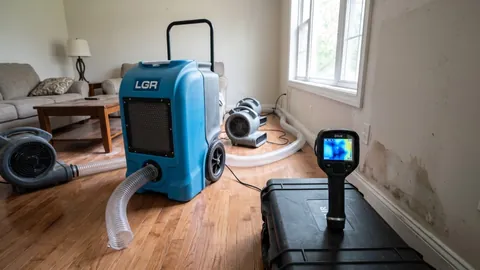
Restoring a sewage-damaged structure in Portland requires establishing negative air pressure with commercial HEPA air filtration units (500 CFM) to prevent airborne bio-contaminants from circulating into living areas. Technicians execute complete structural rinsing, apply quaternary ammonium antimicrobial washes, and run low-grain refrigerant (LGR) dehumidifiers to achieve moisture equilibrium below 15% wood moisture equivalent (WME).
FEMA & IICRC Sewage Cleanup Protocols in Portland, OR
According to official FEMA and NFIP flood damage models, just 1 inch of standing water inside a residential property results in an average of $26,807 in direct structural loss. In Multnomah County, emergency water extraction and structural drying must begin within 24 to 48 hours under EPA/FEMA guidelines to prevent irreversible toxic microbial proliferation (Stachybotrys and Aspergillus).
Regional Federal Center: Oregon falls under FEMA Region 10, headquartered in Bothell, WA. Rapid local extraction protects real estate appraisal values and ensures insurance claim validity under IICRC S500/S520 standards.
Additional Water Damage Restoration in Portland, OR
Explore specialized water damage restoration options in Multnomah County or consult our pricing guide.
Related Trade Services for Sewage Cleanup in Portland
Certain property repairs involve overlapping home systems. Explore certified trade professionals serving Portland:
Microbial Sanitization in Portland
Black water intrusion introduces pathogenic bacteria and fungal spores requiring hospital-grade sanitization and clearance testing in Portland.
Frequently Asked Questions: Sewage Cleanup in Portland, OR
How fast can emergency sewage cleanup crews arrive in Portland, OR?
Certified biohazard emergency teams serving Portland and Multnomah County dispatch immediately, arriving on-site within 45 to 90 minutes to contain biohazards and begin extraction.
Is raw sewage cleanup covered by homeowners insurance in Oregon?
Standard homeowner policies typically exclude sewer backups unless a specific Water Backup and Sump Discharge endorsement was added to your policy. Technicians document insurance-ready loss logs with Xactimate.
What materials must be discarded after a sewage backup in Multnomah County?
All porous building materials in direct contact with black water—including carpet, carpet padding, sheetrock drywall, fiberglass insulation, and upholstered furniture—must be safely removed and disposed of according to biohazard protocols.
How long does complete sewage decontamination take in Portland?
Initial pumping, debris removal, and chemical sanitization typically take 1 to 2 days, followed by 3 to 4 days of continuous commercial dehumidification and air scrubbing.
Portland Priority Inbound Hotline
Need Immediate Sewage Cleanup in Portland, OR?
Connect directly with verified independent licensed service professionals serving Portland and Multnomah County. Immediate phone dispatch available today.
ℹ️ Live Water Damage Phone Dispatch is Active for California Only — View CA Directory